

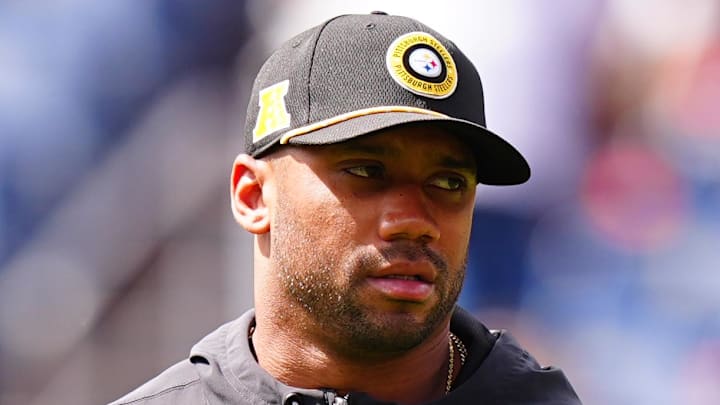
When the Denver Broncos traded for Russell Wilson back in 2022, many across the NFL thought the team had then become a juggernaut, but they were anything but in Wilson's 30 starts for the team. The Broncos were able to at least look semi-competent in 2023, the first year of the Sean Payton era, but it was clear that Wilson did not have a future with this team.
The Broncos decision to cut Wilson following the 2023 NFL Season was an all-time one, as they would then have to endure an $85 million dead cap charge, which was spread across 2024 and 2025. Now that 2025 is over, his contract is fully off the books.
And Denver has spent a ton of money, especially on in-house contract extensions. Furthermore, when you look at the Broncos salary cap right now, it really does show you just how far this team has come.
The Denver Broncos have the second-least amount of dead money in the NFL
After taking on an $85 million dead cap charge, split up between the 2024 and 2025 seasons, the Broncos currently have just $1.2 million in dead cap, which is actually the second-least amount in the NFL, only trailing the Seattle Seahawks, who have just $483,723.
However, what exactly is dead cap? Dan Graziano of ESPN defines it nicely right here:
"A dead money charge is a charge on an NFL team's salary cap for a player who is no longer on the roster. It represents any remaining signing bonus proration that was not accounted for prior to the player's release or trade. It is not a cash payment but rather a cap charge resulting from the rule that allows teams to prorate a signing bonus evenly over as many as five years. If a player is released prior to the end of those five years, all remaining signing bonus proration accelerates onto the team's salary cap for the current year."
Dead money is quite literally dead money. A player who may get cut, for example, that has a ton of guaranteed money left on the deal, would see their former team take on a dead cap charge. Teams simply can't just cut a player and not take a financial hit from doing so if they have guaranteed money left on their contract.
And for the Broncos, that is what they did with Wilson - they knew he had guaranteed money left on his deal, but they clearly wanted to rip the Band-Aid off and 'get it over with,' which ended up being the right move to make.
A team like the Miami Dolphins, which recently cut Tua Tagovailoa, is going to be enduring something similar, as the Dolphins ripped up his contract, but he still has guaranteed money left on this deal. That money is 'dead money' on the Dolphins books.
And given how the Broncos were able to bounce back like this after cutting Wilson, you figure that both Miami and the Arizona Cardinals, who cut Kyler Murray, want to see if they can do something similar.
What we saw with the Broncos and their ability to navigate the dead cap situation may have been, truly, an all-time masterclass by the front office, so the chances are low that the inept Dolphins and Cardinals would be able to replicate this.
It is truly something just how far the Broncos have come since cutting Russell Wilson.
 Add us as a preferred source on Google