

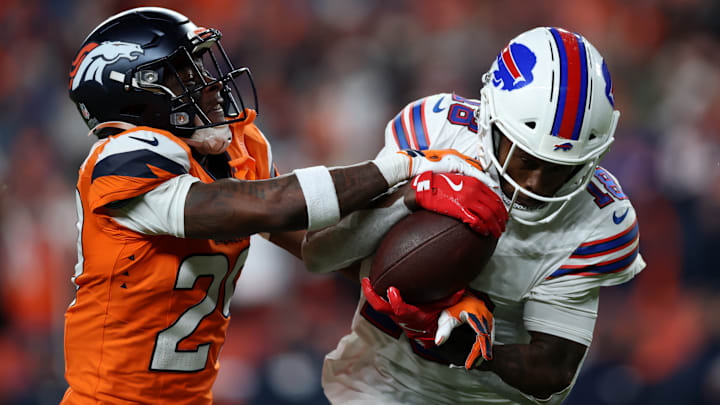
The Denver Broncos beat the Buffalo Bills in the Divisional Round, and thanks to Ja'Quan McMillian, Denver got the ball back in overtime and eventually kicked a game-winning field goal. The play in question, though, that has made the rounds around social media is McMillian's interception over Brandin Cooks.
In short, Cooks had the ball in his hands until he didn't, as McMillian simply ripped the ball from him. In the aftermath following the game, many people took to social media, including Bills fans, to voice their displeasure that the play was ruled an interception.
Many notable figures in the NFL world took to social media to say that the call was correct. Long-time NFL official Gene Steratore, who was in the league from 2003-2018, made a long post on social media about why this call was made correctly.
15-year NFL official and current CBS Rules Analyst Gene Steratore confirms why the Brandin Cooks catch was anything but
Here is Gene Steratore on X/Twitter after the game talking about why the call was made correctly:
At some point when reviewing plays, the league should consider adding a speed threshold for anything involving the element of time.
— Gene Steratore (@GeneSteratore) January 18, 2026
When you slow plays down to 1/100th the speed, it distorts what actually happened and makes it look like, in this case, Cooks possessed the ball… pic.twitter.com/CgEQqWaqp9
Here is the beginning part of what Steratore said:
At some point when reviewing plays, the league should consider adding a speed threshold for anything involving the element of time.
When you slow plays down to 1/100th the speed, it distorts what actually happened and makes it look like, in this case, Cooks possessed the ball for seconds prior to losing it. The game is not played in slow motion or frame by frame.
The rest of his post goes into the actual NFL rules for what is and is not a catch. The final element of what constitutes a catch in the NFL is being able to survive the ground. Any receiver can meet the first two requirements of a catch, which is securing the ball and getting two feet in bounds, but if the receiver loses posession of the ball when contacting the ground, the pass is incomplete.
And that is quite literally what happened here - as Brandin Cooks contacted the ground, he lost possession of the ball, as it went into the hands of Ja'Quan McMillian for the game-saving interception.
It's easy to see why the play was ruled like it was, and there wasn't really any argument or angle of the play that would put it in Cooks' favor. Sure, us as Broncos fans might be a bit biased here, but objectively speaking, this play was ruled correctly despite all the social media backlash that it was not.
 Add us as a preferred source on Google